
A1C – This is a blood glucose test done at a lab or hospital. Instead of measuring what your levels are right now, it shows what your average blood glucose levels have been over the last 3 months. How? Glucose is carried through the bloodstream by red blood cells. A red blood cell’s life cycle is about 3 months so this test shows how levels have been on average for that time cycle. It is used to manage your diabetes and by using this number your healthcare provider can make adjustments to your insulin doses and/or help you make changes to your diet and exercise routine.
Basal insulin – longer acting insulin. It’s usually taken once or maybe twice a day. It’s used to keep your blood glucose levels stable throughout the day and overnight. (Humulin, Lantus)
BG – Blood Glucose
Bolus insulin – this is your fast acting (also referred to as ‘rapid’) insulin. It is used with meals, to cover your food intake and also to correct highs.
Carb Consistency – is eating the same amount of carbs at each meal, and maintaining that from one day to the next.
DKA – diabetic ketoacidosis
FPU (Fat Protein Units) – fats and proteins will also effect blood glucose levels, but they do so many hours after the meal. You can calculate these amounts into your meal bolus but it is also recommended that if doing so you split the dosing and inject half before the meal and half a few hours after, to catch the fat/protein change to BG.
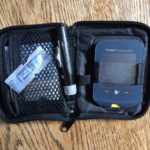
Glucometer – a device for monitoring blood glucose levels at home. It is not just the monitor but also comes with a lancet device for pricking fingers and a handy pocket to put extra test strips in. I usually have alcohol swabs in there too, in case my hands are dirty. Handwashing or using alcohol swabs before testing will provide you with the most accurate reading. This is what mine looks like.
Another thing that I feel is important to mention – never feel embarrassed to whip your glucometer out and check your blood sugar whenever you feel the need. Same with doing your insulin injections. I very openly check my BG and do my injections when it is the right time for me, not based on others comfort level. Saying that, I do try and be polite about it – I know a few people that are uncomfortable with needles so I give them a ‘heads up’ but I will not go and hide in the bathroom or my car. Sometimes this starts a conversation about what I am doing or what diabetes is, which as I have said before, I love sharing information on.
Hyperglycemia – also known as high blood glucose. It is defined as a fasting BG of 11mmol or more. Symptoms may include- increased thirst and urination, increased hunger, extreme fatigue, confusion. Some days we all have highs but if you are seeing it regularly please talk to your healthcare provider as there is a potential of DKA.
LADA – Latent Autoimmune Diabetes in Adults. This is commonly misdiagnosed as type 2 initially and then progresses to type 1. Also sometimes referred to as diabetes 1.5.
Mmol – Millimolar